One of the main challenges of instilling a minority language is simply your child doesn’t get enough exposure. My baby will speak to the vast majority of his family in English, learn at school in English, communicate with his friend in English, and watch tv in English!
It is often the case that a child’s only exposure to their minority language is through conversation with their speaking parent(s). The situation is difficult enough without the extra challenge of being a Cantonese learner yourself!
Therefore, there is a real need to create an immersive environment at home so Cantonese is embedded in everyday life and your child sees Cantonese as normal and useful. Here are ten ways to make your home more immersive.
1. Consume Cantonese Media
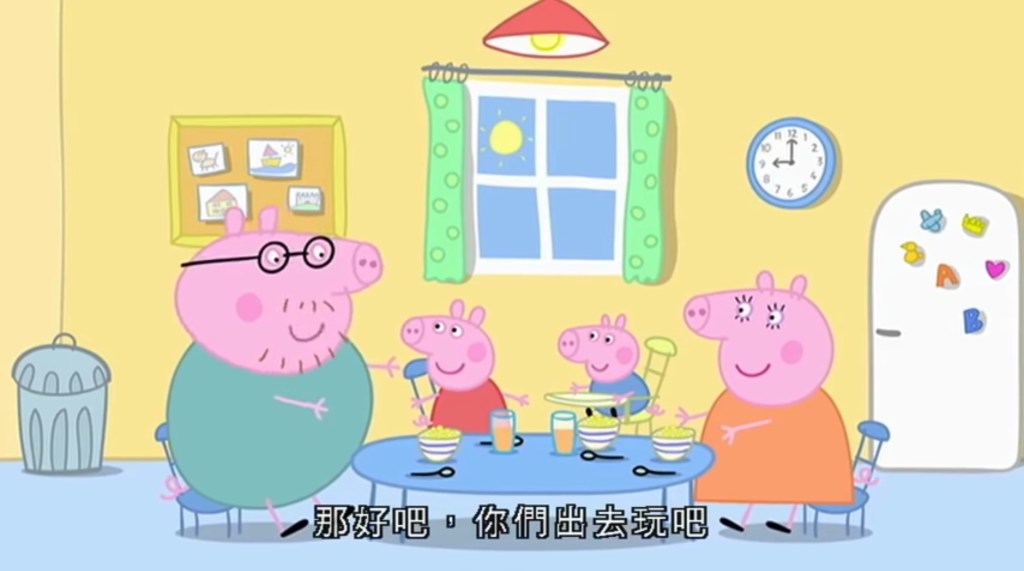
(Ngo5 m4 sik1 gong2 jing1 man2 – I don’t speak English)
Whether you and your child are watching tv, listening to podcasts, or reading books, you are instilling the idea that there is a whole world of Cantonese speakers out there. This sends the message that being able to understand Cantonese is useful and interesting.
Even though I can’t understand everything that’s being said, if I want some background noise at home, I’ll stick on a Cantonese cartoon or Disney film. Whilst this helps my baby and I gain familiarity with the cadence of Cantonese, I feel the main benefit will when AJ’s old enough for screen time as he will naturally watch shows in Cantonese (because he’s done it his whole life!)
I remember reading one mum’s story about how her child was shocked to discover Peppa Pig also spoke English. That’s how deeply I want to embed Cantonese media in my home!
2. Display Cantonese Artwork
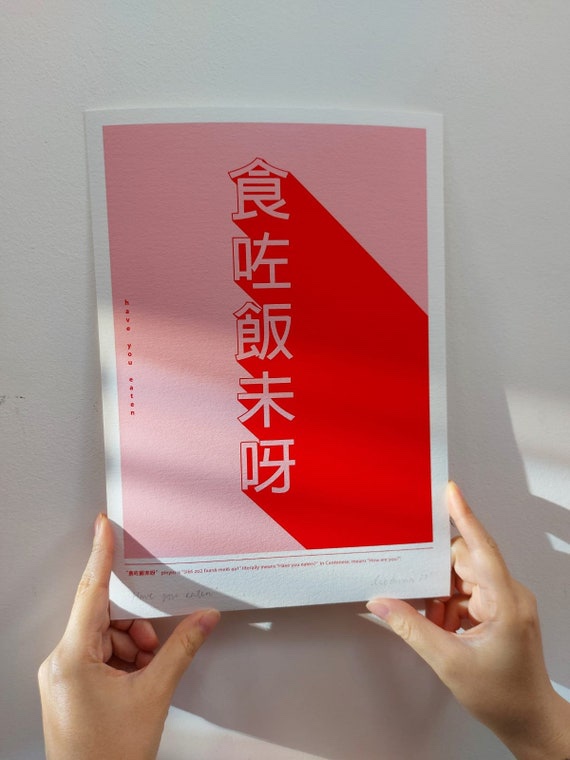
Image Source: ‘Have you eaten Giclee print’ by BeiPrintLondon on Etsy
Having art on the wall can make the difference between a house and a home. I have loads of posters and print on my walls and it suddenly occurred to me that all the text on display is in English. While this may seem a bit strange to display Chinese text if you can’t read it, it’s no different to putting up that cute alphabet print up in your baby’s nursery. AJ won’t be able to read the English or Chinese artwork I put up, as he’s only 6 months old, but my hope is that he and I will one day be able to read both.
3. Create Reward/Routine Charts in Cantonese
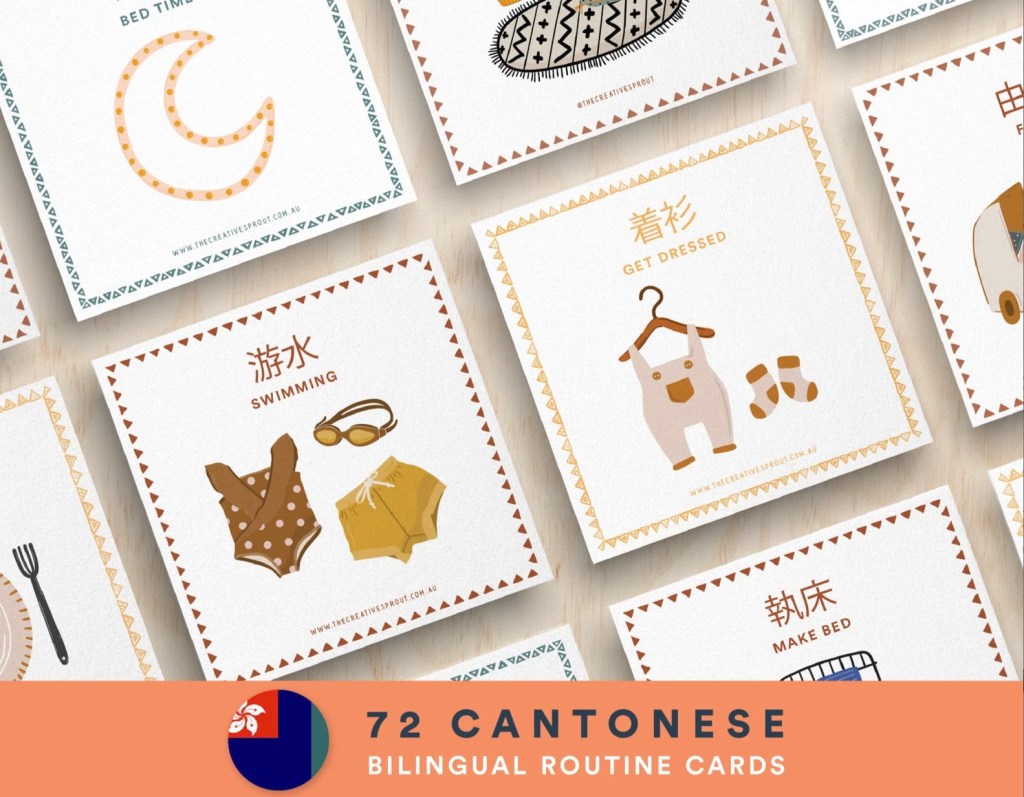
As an ex-teacher, I love sticker charts, reward tokens, and colourful displays and know I will be utilising all these tools as a parent but doing so in Cantonese. The vocabulary you want to focus on as a parent are the words we use in our daily routine and the ones we use to praise our children.
So instead of creating your reward and routine boards in English, use a Cantonese version so you can simultaneously practise vocabulary relevant to you while teaching your child.
4. Play Games in Cantonese

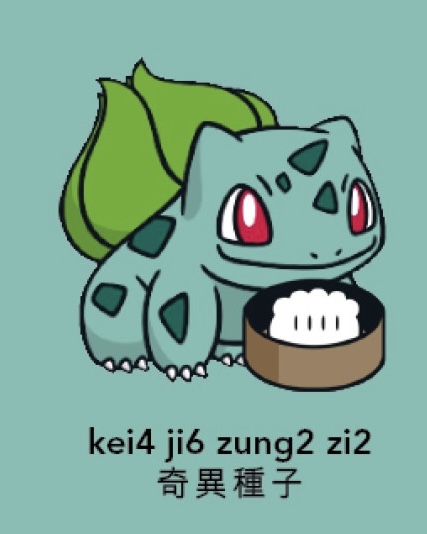
Whether its with a board, console, or computer, in our house we love to game and my partner and I are pretty sure AJ will grow to love gaming in at least one of these iterations. I plan on introducing every game he plays in Cantonese so each time he wants to play, he will instinctively use Cantonese.
When teaching your child the rules to a board or card game, give the rules in as much Cantonese as you can (feel free to make up some names for pieces or look up specific terminology in advance). Your child will most likely have to learn new words to play a new game so you might as well teach these words in your target language.
For video games, it is simply to matter of setting the language to Cantonese if you can. Children are very enterprising so you can be confident they will figure out a way to play (though this might just mean learning enough to change the settings back to English or it could become a treasure trove of Cantonese exposure!)
Don’t forget that pretend play is an ideal time to introduce situational vocabulary. Whether your child is playing doctor or (dim sum) chef, the Cantonese they use will definitely be useful when they are older too.
5. Cook and Eat Cantonese Cuisine
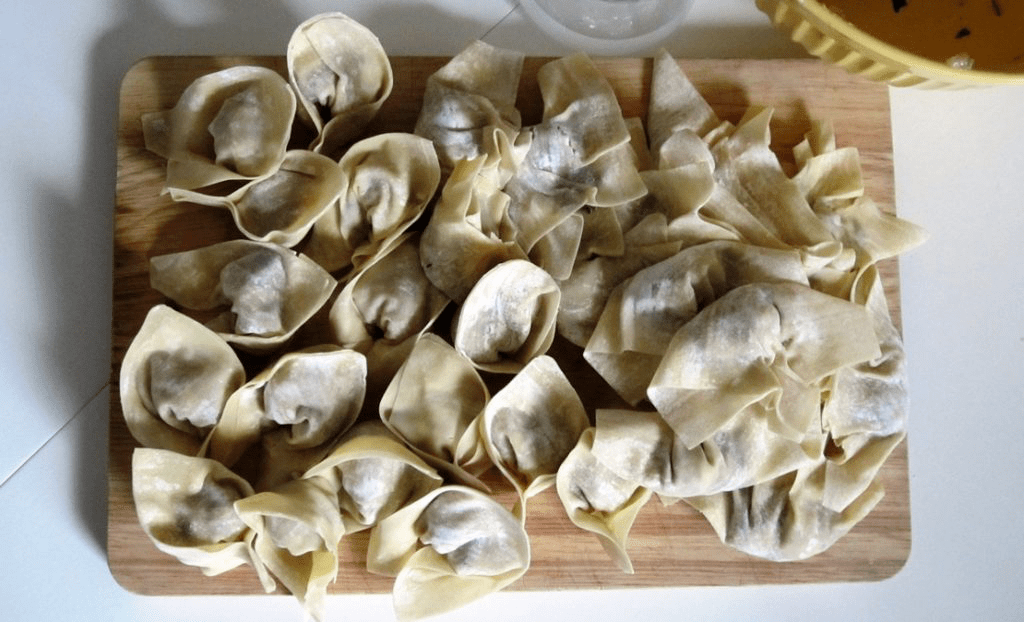
It’s not like you need another reason to eat more Cantonese food! My partner’s loves my relatives visiting simply because of the food they cook and I don’t blame him. Food is an amazing way to connect to a culture so make sure you share your family recipes with your child.
Don’t worry if you don’t any family recipes to pass on, there are so many recipe books you can draw inspiration from. I personally love The Dumpling Sisters cookbook as their recipes remind me of my je4 je4’s cooking. And if cooking really isn’t your thing, you can always just go jam2 caa4 instead!
6. Incentivise speaking in Cantonese
It is natural for children to only want to use the majority language, especially when they start school. When they also realise it is quicker for both you and them to speak in English, they have little incentive to learn to speak Cantonese with you.
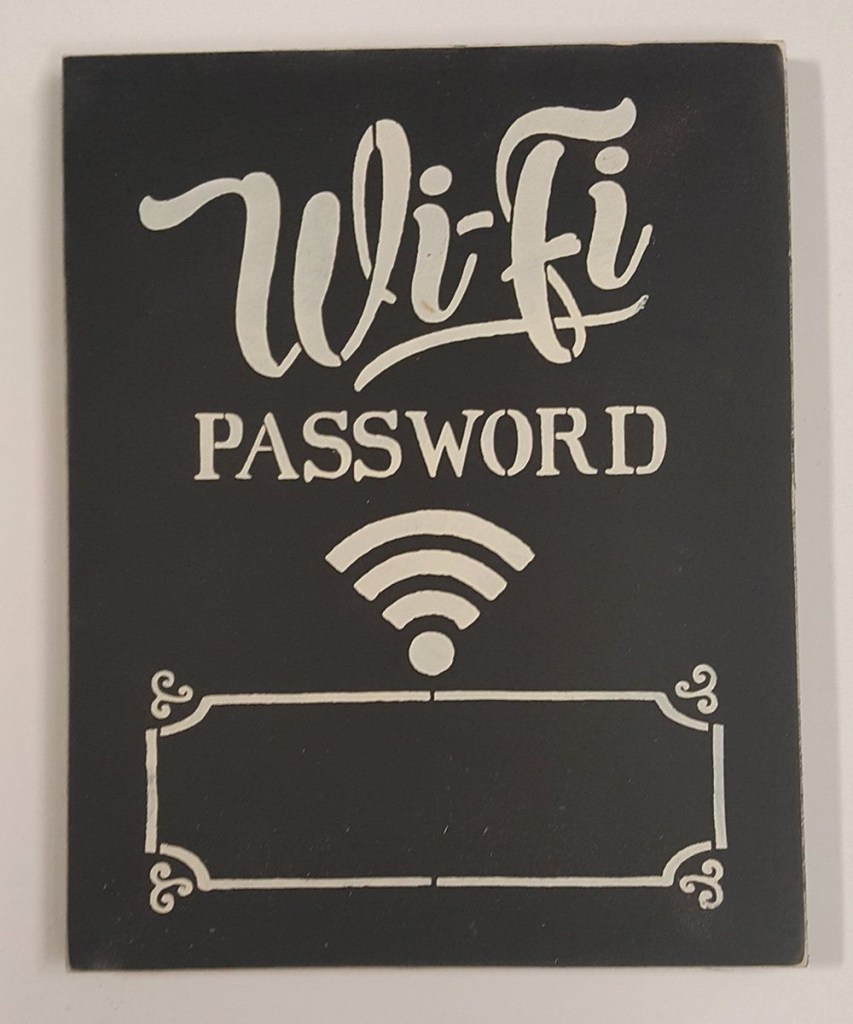
Therefore, it is good idea to provide incentives to speak Cantonese. You need to create a need for Cantonese in your lives. For example, I plan on offering unlimited screen time to AJ if it’s in Cantonese but limit his time if it’s in English. I read about a parent who would give out the daily wifi password in Cantonese. You could say Cantonese is your and your child’s secret language and go on spy missions together.
If you have any other ideas to incentive children to speak Cantonese then please comment below!
7. Celebrate Chinese Traditions
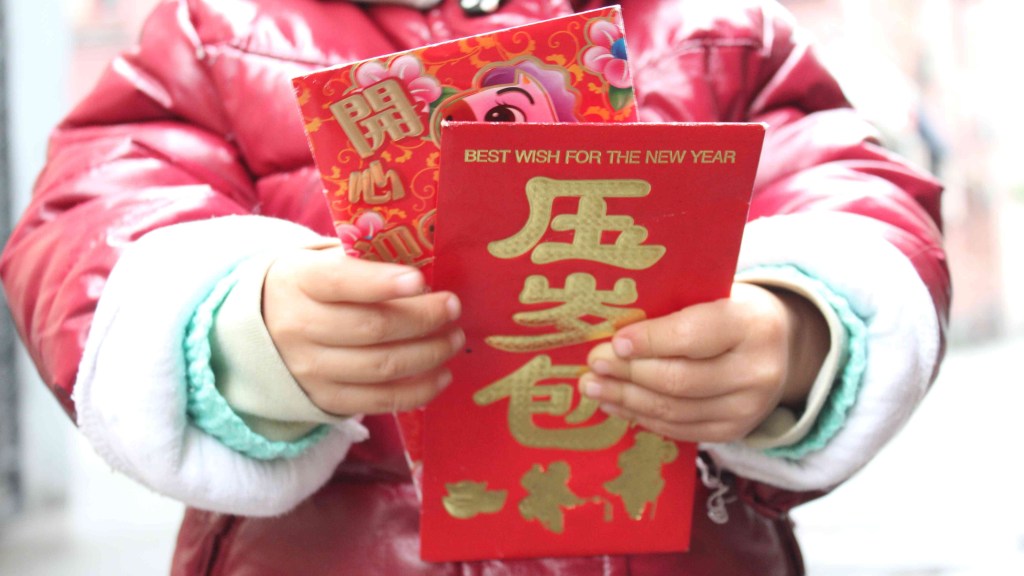
Going to a predominately white-British school meant for a lot of my childhood, I felt I stuck out like a sore thumb. I wasn’t proud of being Chinese as I felt it “othered” me from my peers. That is until Chinese New Year came around. I was delighted every year to celebrate a holiday that no one else at my school got to celebrate. Every red packet I received felt extra special to me.
I want to instill that feeling of being special in AJ. It is a gift to be connected to two cultures so make sure you celebrate hard at home. Make lion costumes and do your own lion dances at Chinese New Year. Make your own boats to race while eating rice dumplings for the Dragon Boat Festival. Build paper lanterns and go moon-gazing for the Mid-Autumn Festival. Create your own unique traditions for your brilliant family!
8. Label Household Objects in Cantonese
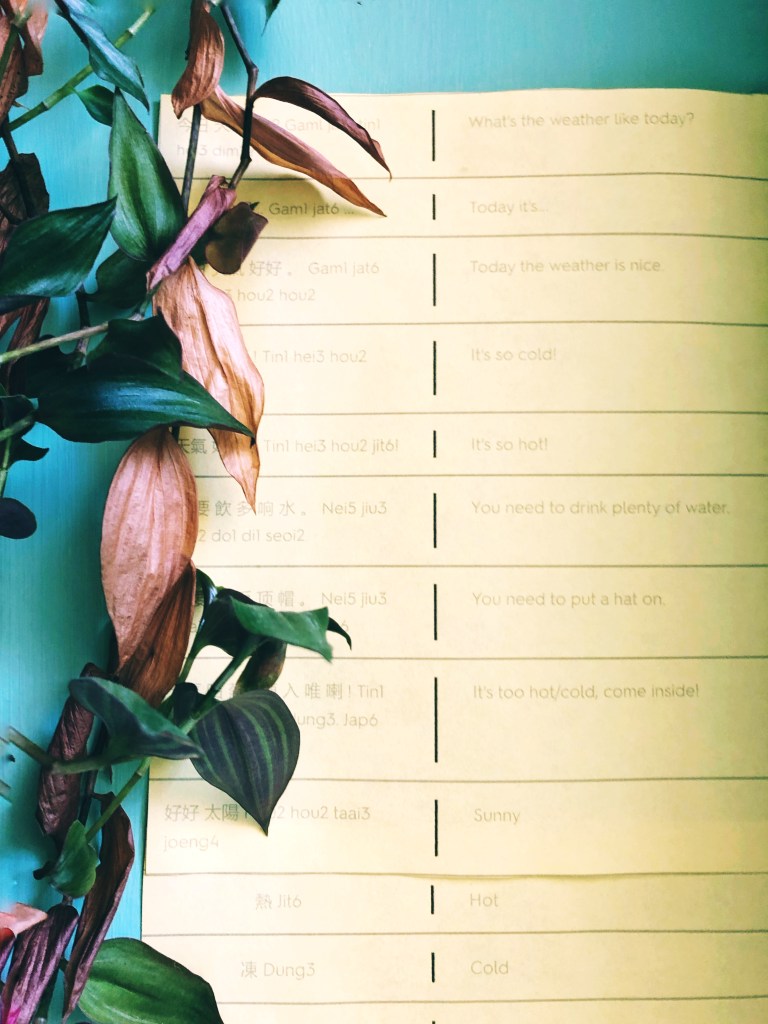
This technique is commonplace for language learners anyway but your children can benefit from this too! You can create your own flashcards or print out ready made ones and start labelling household objects. I personally make flashcards on Quizlet and then use the print function. Or for smaller objects, I whip out my trusty label maker and make Jyutping labels (yes, I absolutely am the sort of person who needs a label maker). Having labels and flashcards on display will aid your daily conversation as you won’t have to break your flow looking up words. (My poor Alexa has told me at least 50 times the word for microwave).
You can also place situational phrases in the area of the home you are most likely to use them. For example, I have phrases related to feeding a baby on my fridge so every time I reach for my baby’s bottle, I have the sentences I want to say ready for me.
9. Do Story Time in Cantonese
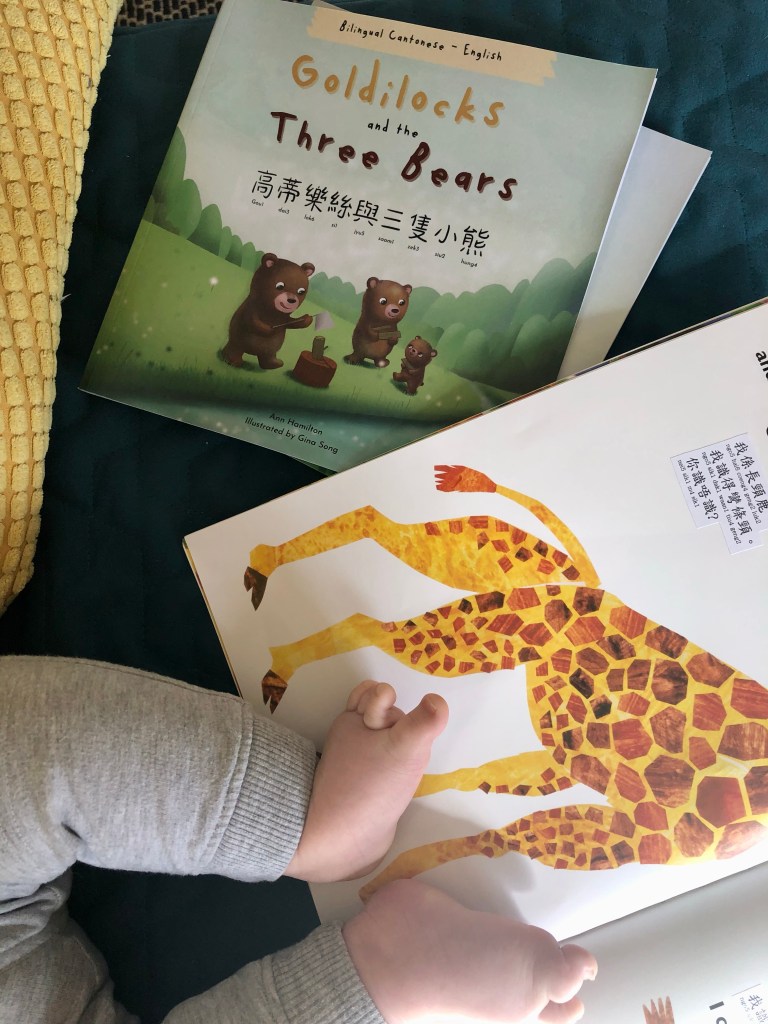
Story time for me is the sacred time in the house. I absolutely adore reading and hope to pass on my passion for books to AJ. Of course, the dream would be to only read in Cantonese but there are several barriers.
Firstly, because Cantonese isn’t spoken the same way it is written even if you have great speaking proficiency, you may not have the skills to read Chinese books. You could just translate English books on the go but this means your child will never engage with their books independently in Cantonese. Translating on the fly can also result in slower language acquisition as you may change how you tell the story on each reading. Alternatively, there are a small but growing number of books written in colloquial Cantonese i.e. written how a Cantonese speaker speaks, which may bridge the gap in your reading skills.
But what about if, like me, your speaking skills are rubbish and reading skills are non-existent? Don’t worry, we have options. Like colloquial Cantonese, there is a growing number of books that including Jyutping romanisation. While some people are hesitant to use Jyutping books as it does not teach how to read Chinese characters, if you are prioritising speaking and listening skills then Jyutping books are very useful. With this method, I’ve been reading to AJ everyday in Cantonese even though m4 sik1 tai2!
10. Speak as much Cantonese as possible!

I’ve included this tip even though it is common sense because I know it is really common for parents to get discouraged from speaking Cantonese to their child. Maybe your child is demanding you speak English like they do at school or maybe you are concerned you are teaching poor speaking skills as a non-native speaker. In these times, it is vital to reflect why you want to give your child the gift of Cantonese.
For me, I want AJ to feel connected to his cultural heritage in a way I didn’t growing up. Whilst he may never be fluent in Cantonese (because raising bilingual children is hard), I know I’ll never reach my goal for him unless I persevere and speak.
Those are my ten top tips for creating an immersive environment. If you have any that didn’t appear on the list then do comment below. I would love to hear them.
 Mama Bear Cantonese