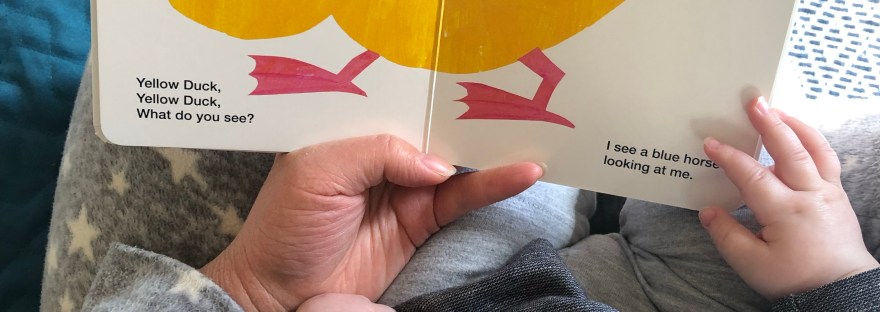
Buying books and reading are two separate hobbies as far as I’m concerned and there’s no better reason to give in to my inner book-hoarder than having a baby.
My goal is to be able to spend every story time reading to AJ in Cantonese, however, this presents a few issues:
- I can’t read Chinese
- I don’t speak Cantonese well enough to translate on the fly
- There are only a few books that include Jyutping or another romanisation
- If I limited myself to Jyutping books, I can’t share with AJ the books I loved as a child
I’ve decided to invest my efforts in creating my own translations for AJ’s books. It will be good practice for me and it will ensure I am being consistent when reading to AJ.
I hope my step-by-step method on how I create my own Cantonese books will help you save time in creating your own.
Step 1: Search for Existing Translations
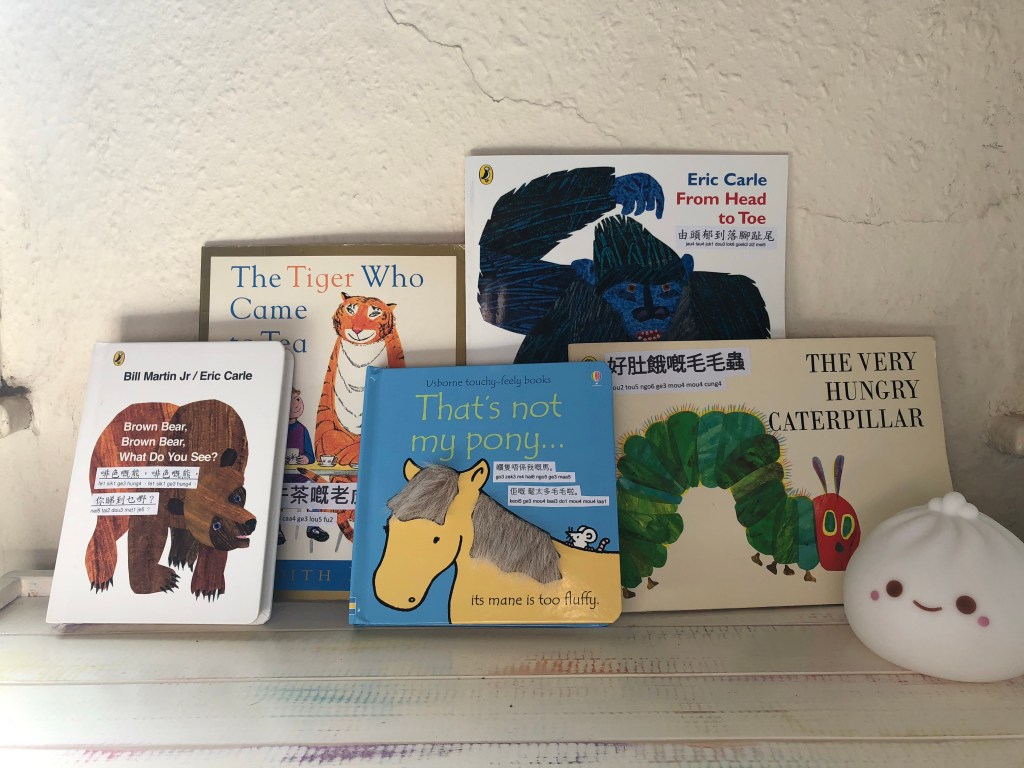
By hunting around on the web, I’ve managed to find written Cantonese and Jyutping translations to many popular children’s books like the Tiger Who Came for Tea and the Hungry Caterpillar. Huge shoutout to Cantonese for Families and the Facebook group Cantonese for Parents for being excellent sources for translated books.
Another tip to save you translating a book from scratch is to look up Cantonese book readings on YouTube. You may luck out and find one with captions, otherwise, you may have to stretch your listening skills.
If you need to write your own translation, ensure the book is at a low enough level to match your proficiency. While I would struggle to translate “The Gruffalo” into Cantonese, I can manage “That’s Not My Puppy”. Also, remember transliterating i.e. translating a book word by word will make for an very bad translation. Once you are confident with the basic sentence structures of your target book, I recommend using multiple dictionaries when figuring out the vocabulary you need to ensure your word choice accurately reflects the context of the book.
Step 2: Print out your Translation
There are a couple of things to consider before printing. One is ensuring the font size will fit into your copy of the book. Even if the translation was made with the book size in mind, the same children’s book will be a very different size depending on whether it’s the board book or paperback version. I often just set my printer to print multiple pages on on piece of paper to get a font size I can work with so there’s not really a need to edit the translation directly.
Secondly, to save you time gluing each sentence into your book, I recommend printing your translation onto sticky back label printer paper (these are the ones I use). Just pop them in the printer like you would normal paper.
Step 3: Stick the Translation In!
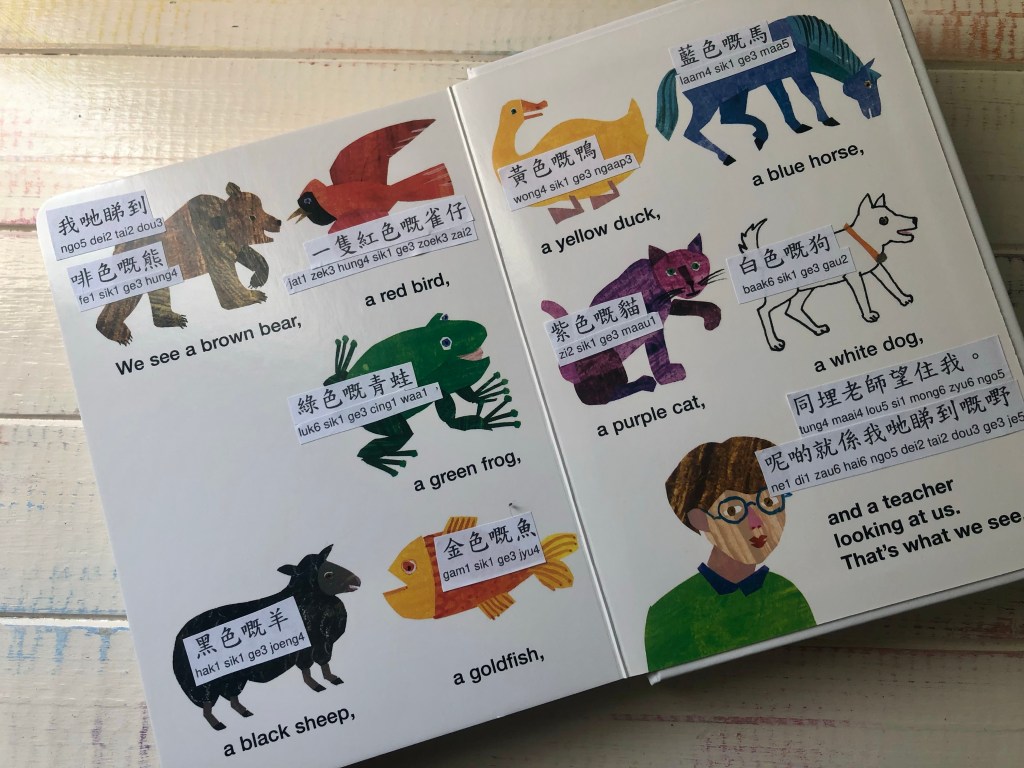
If you have used sticky back printer paper, then it’s simply a matter of cutting out each sentence and placing them in your book. If you are using glue, you will need to wait for each page to dry before moving on to the next.
Placing your sentences is a fine art. My partner does not speak any Cantonese so wanted the English text of AJ’s books preserved so he can enjoy story time too. This means sometimes I have to get a bit creative with finding room for the English text, my sticky labels and the pictures!
Also, when considering placement, do try to break up sentences if there’s room so you don’t have large blocks of Chinese and jyutping on a page, even if the English text seems to look fine as one paragraph. Paragraphs of text are harder to process, especially when you are still honing your reading skills in Cantonese, so breaking up paragraphs will make for a smoother and easier reading session.
Do you like to have translations stuck into your child’s books or do you find its too much effort? Pop any tips you have for translating books or story time in Cantonese below!
Note: As an Amazon Associate I earn from qualifying purchases. I promise to only link products I personally use and recommend.
 Mama Bear Cantonese
8 thoughts on “How I Make my Own Cantonese Books”